
Use forecasting for near-term pricing and planning
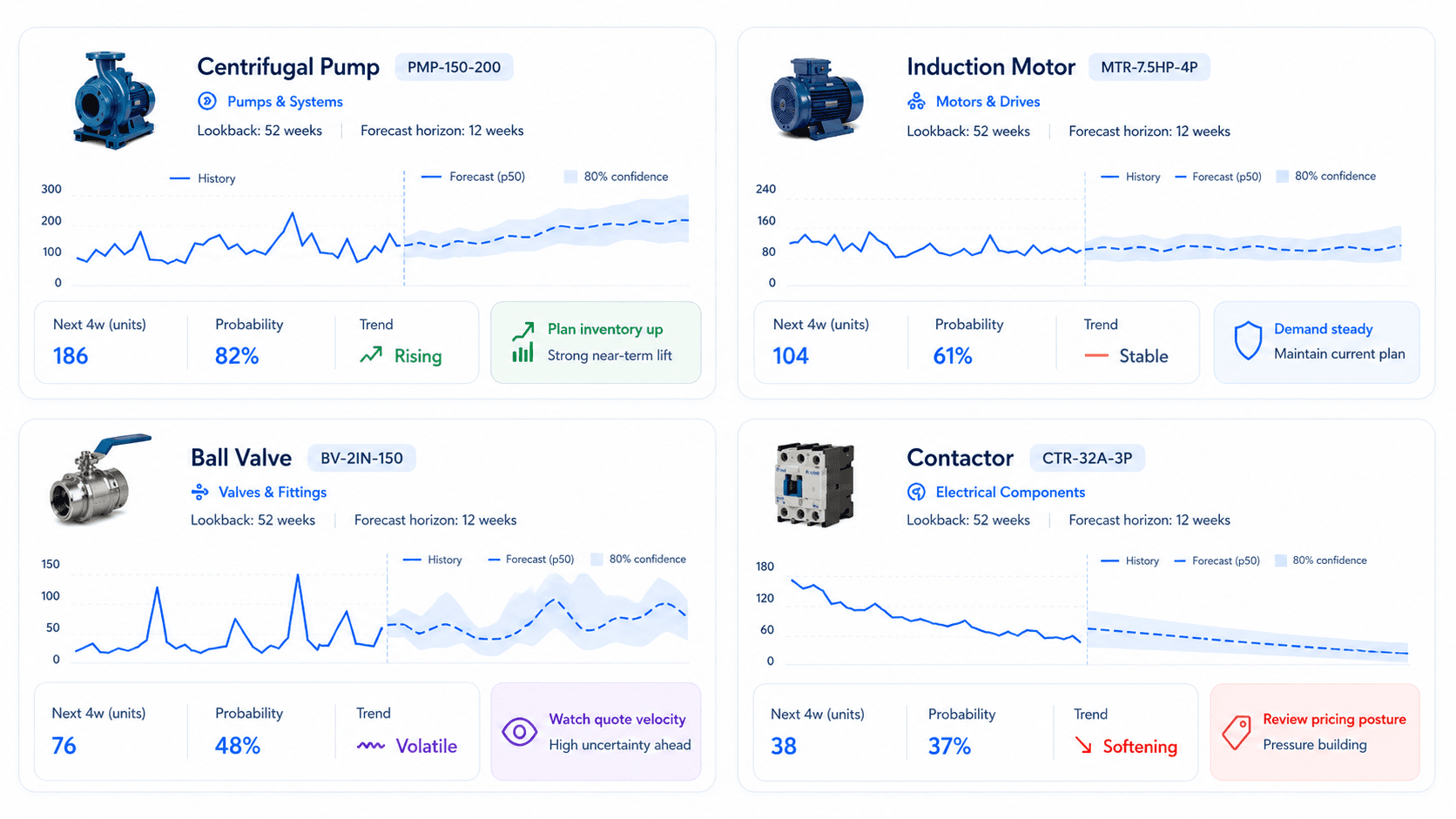
Forecasting turns recent demand movement into a near-term outlook teams can use in weekly pricing and planning cycles.
Why forecasting matters
Reduce blind spots
Spot likely movement earlier so teams are not waiting for surprises before adjusting plans.
Improve planning discipline
Anchor weekly planning reviews around expected demand shifts, not last-minute guesswork.
Support pricing posture
Use expected demand movement to time price actions and escalation decisions with more confidence.
What it helps teams prepare for
Near-term demand shifts
Identify where demand is likely to accelerate or cool in the next cycle so teams can prioritize reviews.
Planning tradeoffs
Evaluate likely impact on sales pace, inventory exposure, and margin before changes are committed.
Operational coordination
Give pricing, sales, and planning a common near-term view so meetings end with clear actions.
Key capabilities
Anticipate near-term movement
Project short-horizon demand direction by product group to guide review timing.
Support planning discussions with forward-looking context
Use forecast ranges and expected movement to make near-term planning calls faster.
Reduce reactive decision-making
Flag likely movement earlier so teams can act before pricing or inventory pressure builds.
Connect forecast signals to pricing and inventory conversations
Translate forecast changes into concrete pricing and inventory follow-ups for each cycle.
How it works alongside demand and pricing
Forecasting adds a near-term layer to demand and pricing workflows, helping teams decide what to review now, what to monitor next, and where cross-team action is needed. The demand forecasting for price changes guide goes deeper on using forecast context before and after pricing updates.
Add forecast context to pricing decisions
Discuss your current planning cadence and where short-horizon forecasting can strengthen pricing decisions.