
See demand movement before you finalize prices
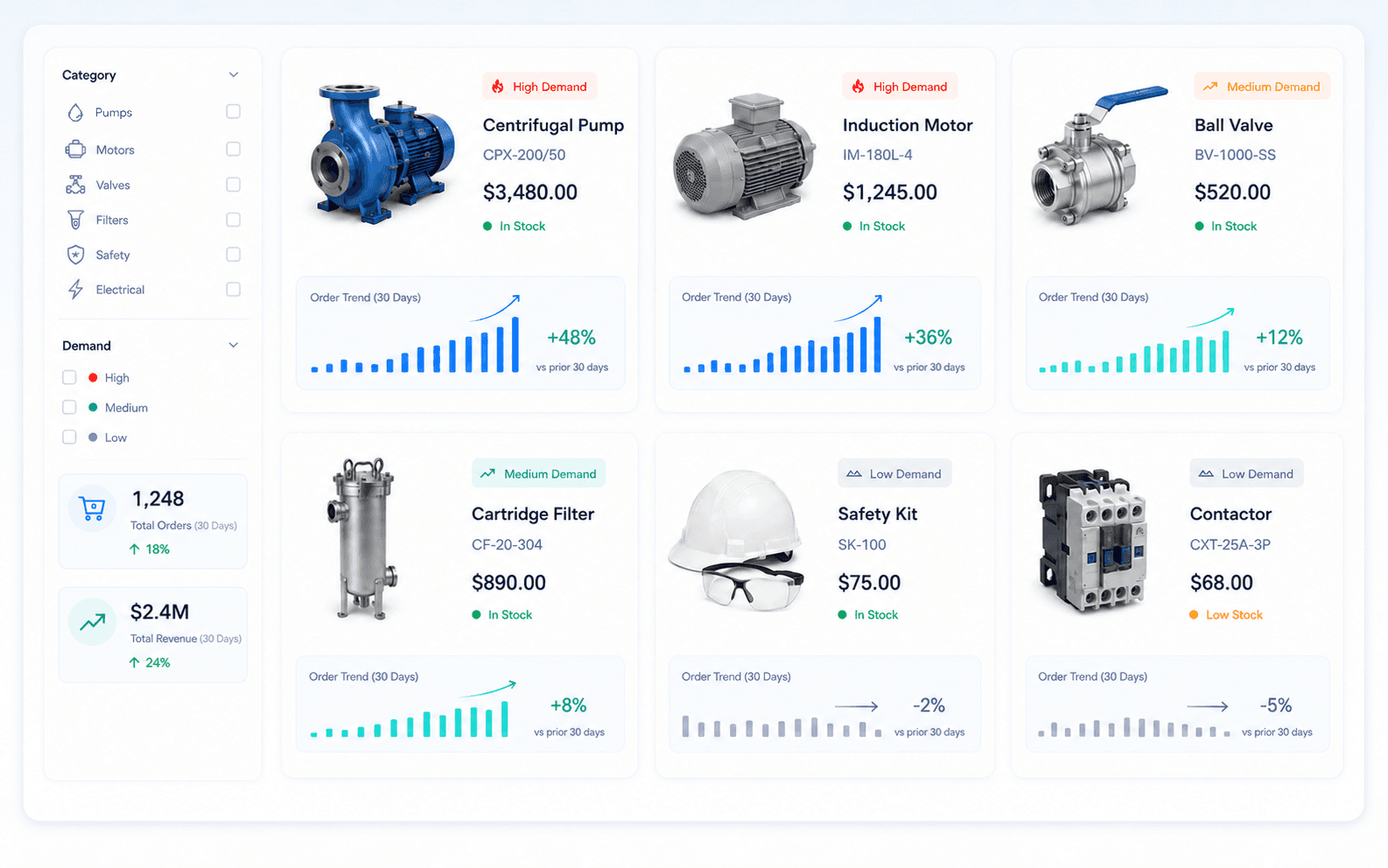
Demand Workbench turns recent sales activity into product-level demand signals so teams can quickly see where pricing posture may need a different response.
What it helps teams see
Recent movement
See which categories are accelerating, flattening, or softening from recent sell-through.
Pressure points
Flag products where current price stance and demand trend look out of sync.
Shared context
Give pricing, sales, and planning one operating view for weekly review and escalation.
Why teams use it
Cost-only decisions are limited
Products with similar cost can still require different price actions when sell-through diverges.
Reactive cycles create risk
Without earlier demand signals, teams respond after margin pressure or quote friction is already visible.
Alignment is hard
A single demand view reduces side-channel debate and helps teams leave reviews with clear owners.
Key capabilities
Bring recent sales signals into pricing discussions
Surface near-term movement directly in review so teams can prioritize what needs attention first.
Track demand movement by product and category
Highlight rising, stable, and softening demand zones without manual spreadsheet rollups.
Help identify where pricing posture may need attention
Point reviewers to SKUs where current stance may be too aggressive or too conservative.
Connect operational decisions to recent demand conditions
Turn demand movement into specific follow-ups for pricing, sales, and planning owners.
How it fits with pricing and planning
Demand Workbench adds a near-term demand layer to pricing operations, helping teams decide what to adjust now, what to monitor next, and where cross-team action is required. For teams shaping price-change reviews, the demand forecasting for price changes guide explains how demand context can support pricing posture and follow-up.
Bring demand signals into your pricing rhythm
We can map where demand movement should change review cadence, pricing posture, and escalation paths.