
Control pricing decisions before they become margin problems.
Pricing Workbench helps teams review cost changes, apply pricing rules, manage exceptions, and prepare pricing decisions across complex catalogs.
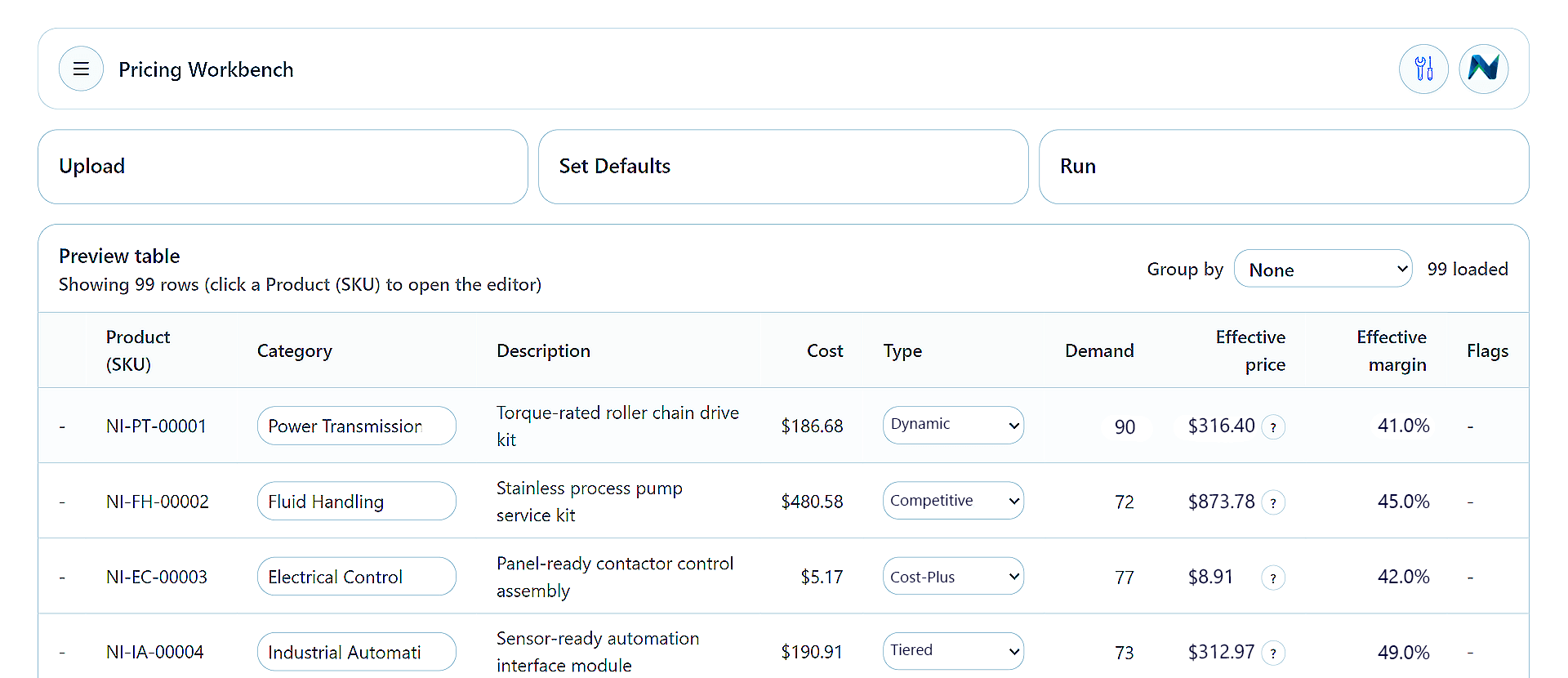
Structured baseline pricing
Work from a cleaner starting point across the catalog
Use the workbench to organize price updates around shared logic instead of one-off spreadsheet edits. Teams can establish a more consistent baseline, review recommendations, and move through pricing changes with less manual cleanup.
- Create a cleaner baseline for recurring pricing updates
- Apply shared logic across product groups and exceptions
- Review results before changes move into operational use
Category rules
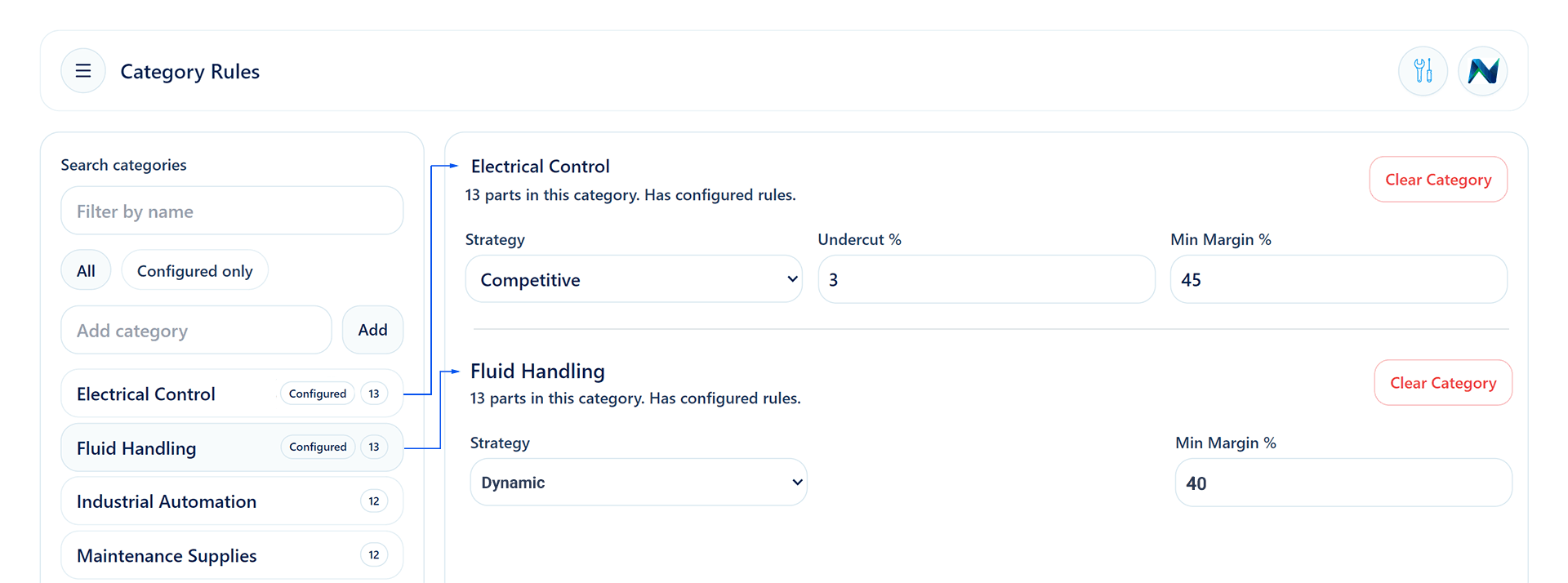
Apply pricing logic at scale without treating every SKU as a one-off
Category-level controls make it easier to standardize pricing behavior across similar products while still supporting edge cases where needed. This helps teams reduce inconsistency as catalogs and ownership boundaries grow.
- Support repeatable logic across categories and product families
- Make exception handling easier to explain during review
- Keep pricing operations more governable as SKU counts increase
What it helps teams do
Why teams use it
Supplier cost updates
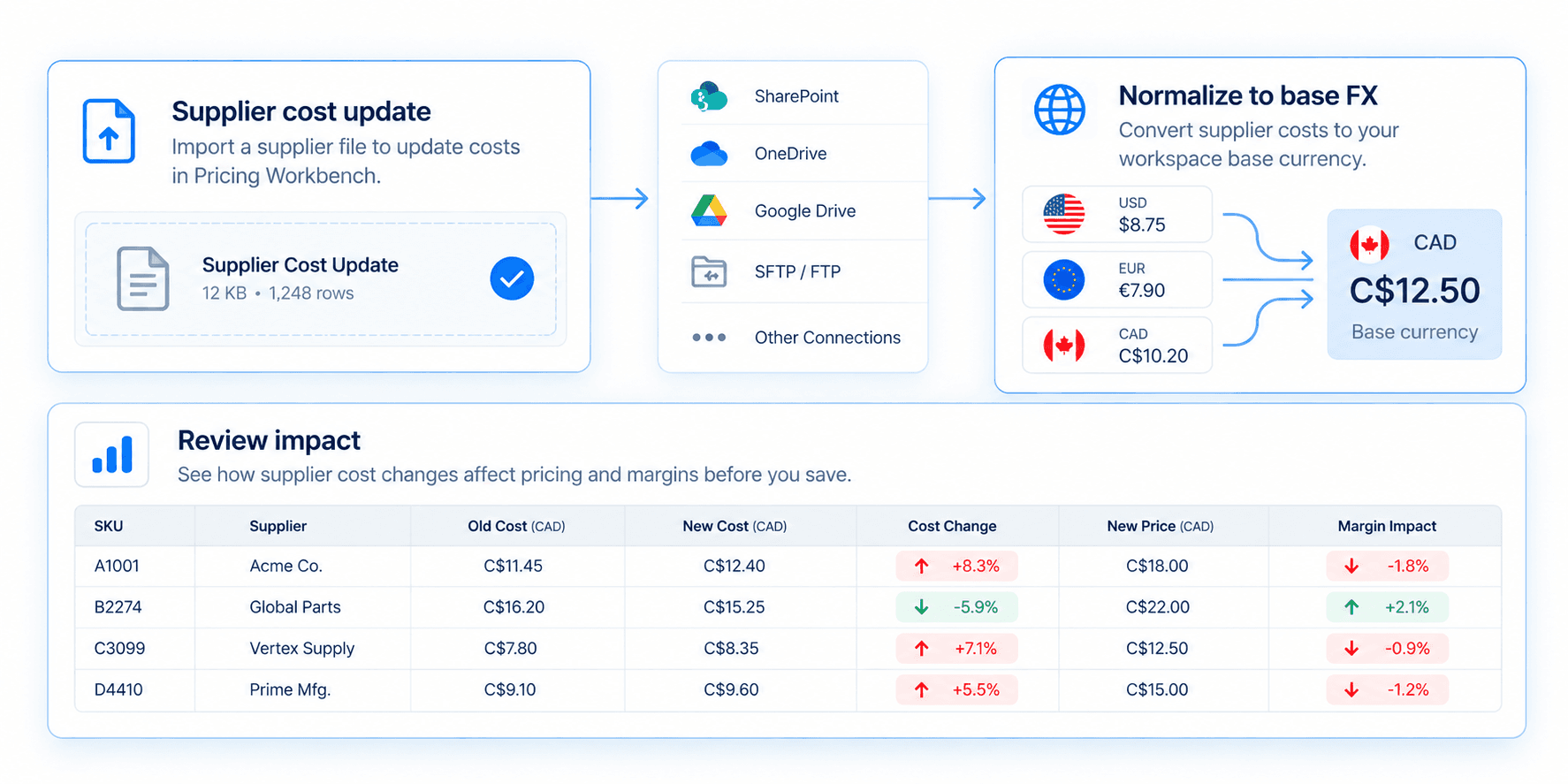
Apply supplier cost changes without rebuilding the entire catalog
Use supplier cost files to update only the affected SKUs, keep the broader catalog baseline intact, and review the pricing impact before revised values move downstream.
- Apply partial SKU cost updates without recalculating unaffected products
- Preserve supplier and source context through the review
- Normalize incoming supplier costs to the workspace base currency
- Review cost deltas, pricing impact, and margin exposure before saving the update
Key capabilities
How it fits the broader workflow
Pricing Workbench is where teams review costs, pricing logic, recommendations, and exceptions before decisions move downstream. Reviewed Workbench snapshots can then be used to create controlled Price Lists for commercial use.
Related pricing resources
Estimate pricing workflow impact
Use the ROI calculator to model how margin protection, supplier cost recovery, and labour savings may affect your pricing workflow.
Cost Change Review Playbook
Use a repeatable review process for supplier updates and pricing actions.
Pricing Decision Management
Read how pricing teams control price changes, exceptions, approvals, and margin protection.
Plan your pricing workflow rollout
Talk through your current pricing operations and map where Pricing Workbench can create the most immediate operational lift.